Retention System Play4tune
I designed Play4tune’s mobile retention system end to end: missions, tournaments, store and profile connected by a HUB.
- Role
- Product Designer · end to end
- Duration
- Feb–Sep 2026
- Platform
- Mobile
- Team
- Me (design) + Product + Engineering
Screens in production
Real screens from the system, grouped by module and built with the multi-tenant Design System’s tokens and components.
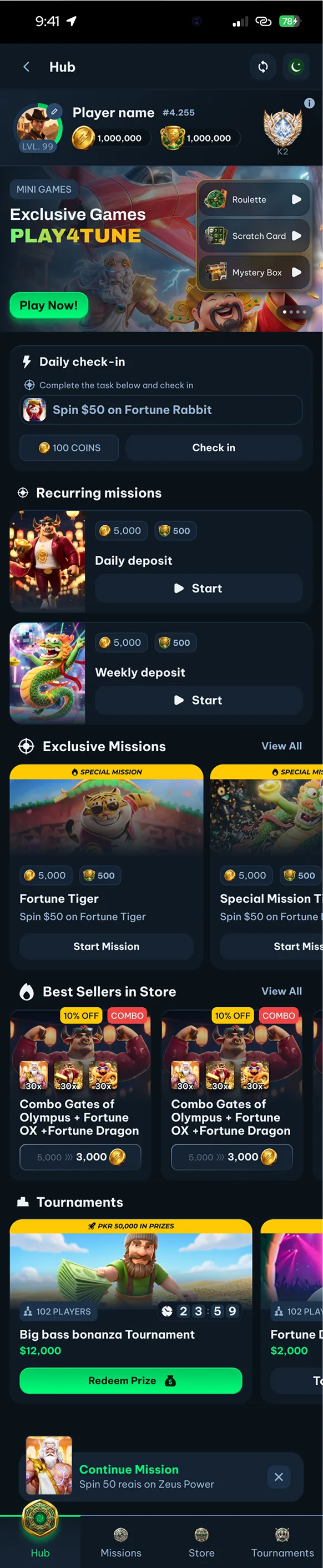
HUB
The center of the loop: access to all four modules, with the coin balance always in view.
HUB
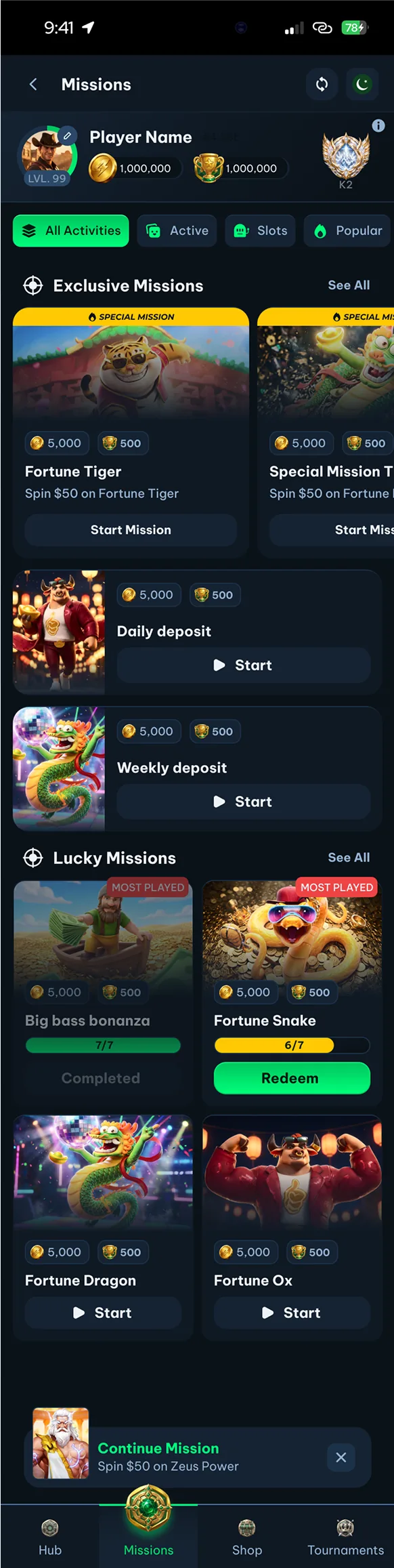
Missions
Active missions, with progress and reward on every card.
Missions 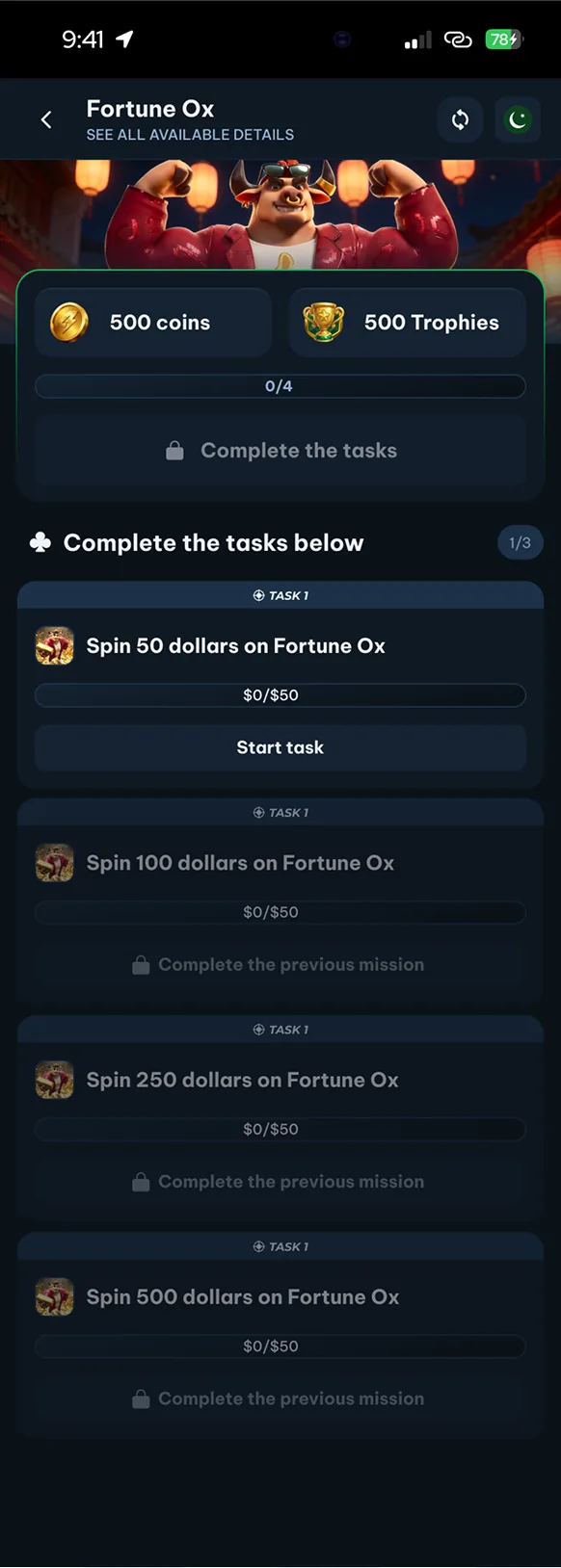
Expanded mission
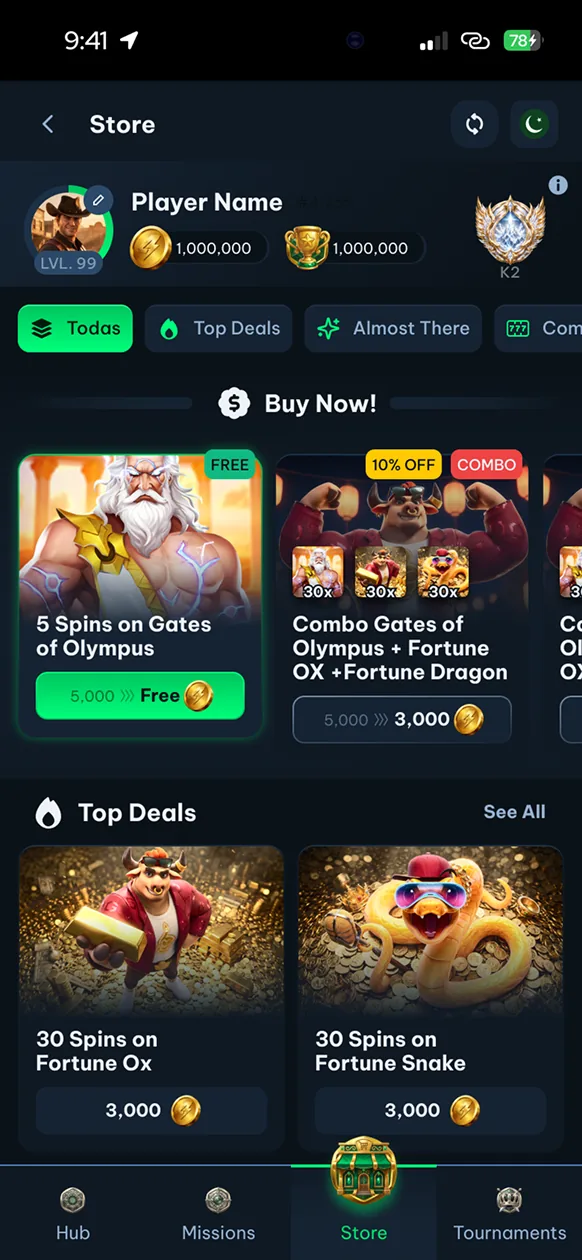
Store
From catalog to confirmation, with the cart also available as a widget.
Store 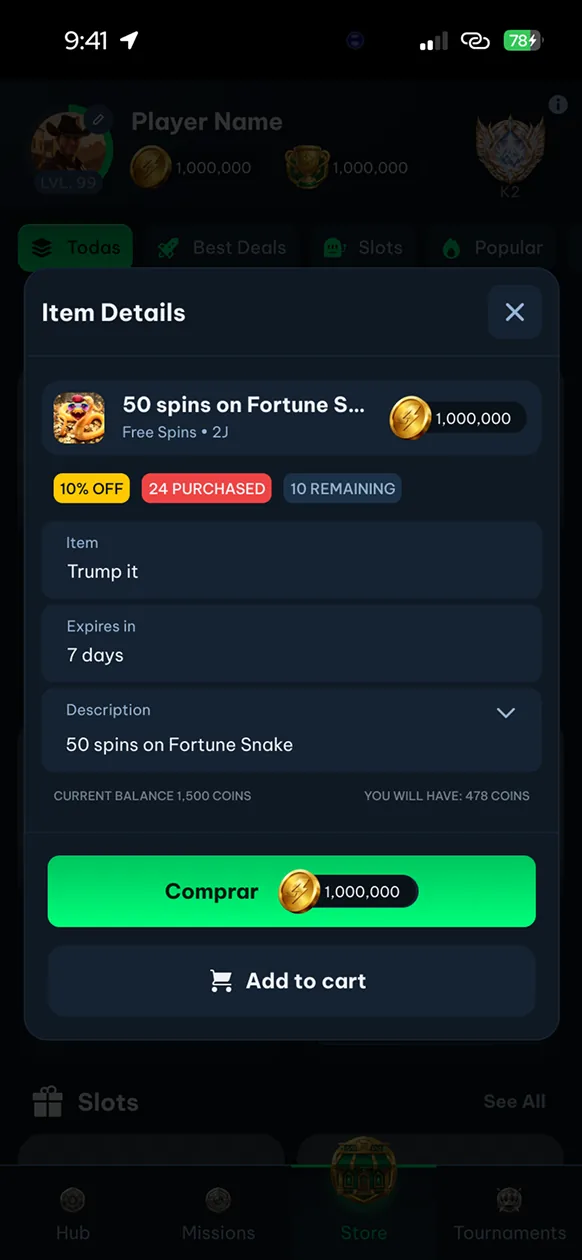
Item detail 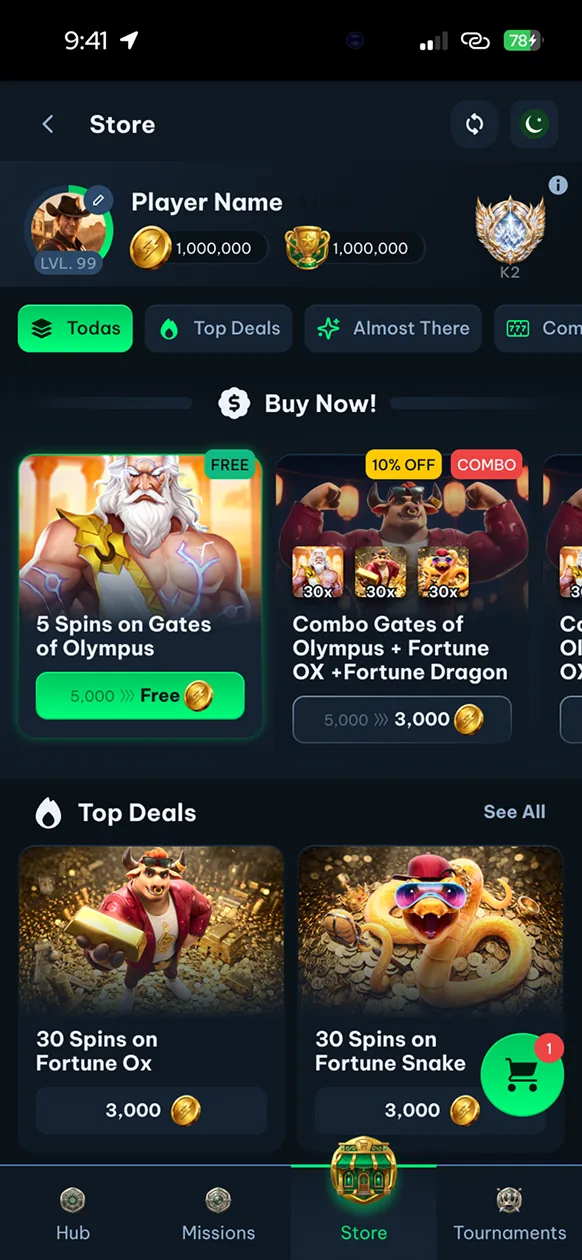
Cart widget 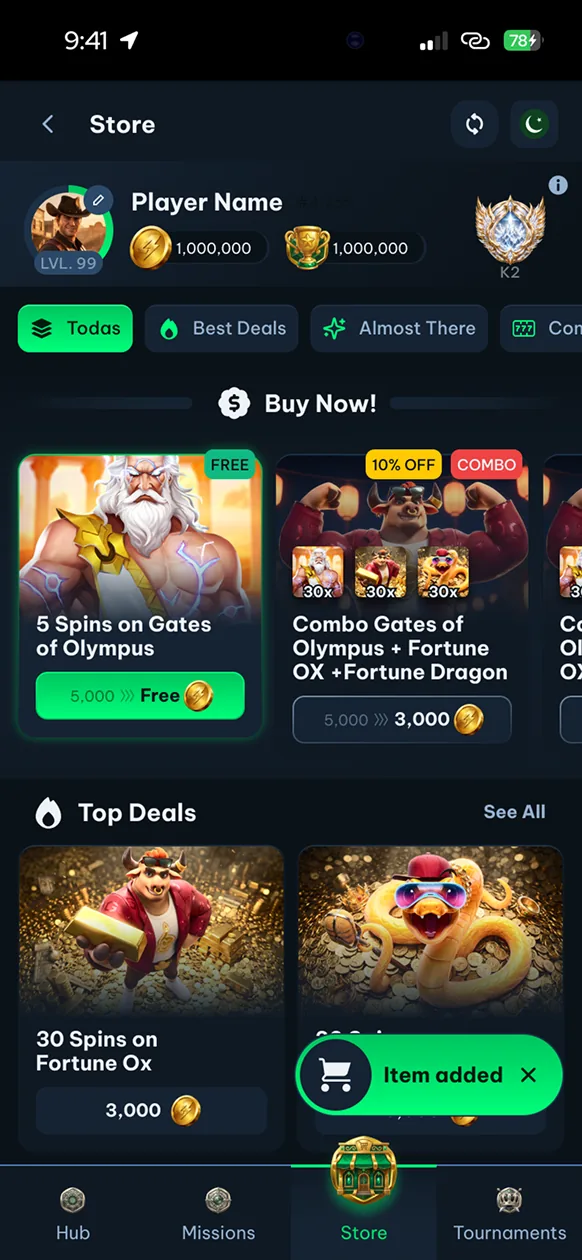
Expanded widget 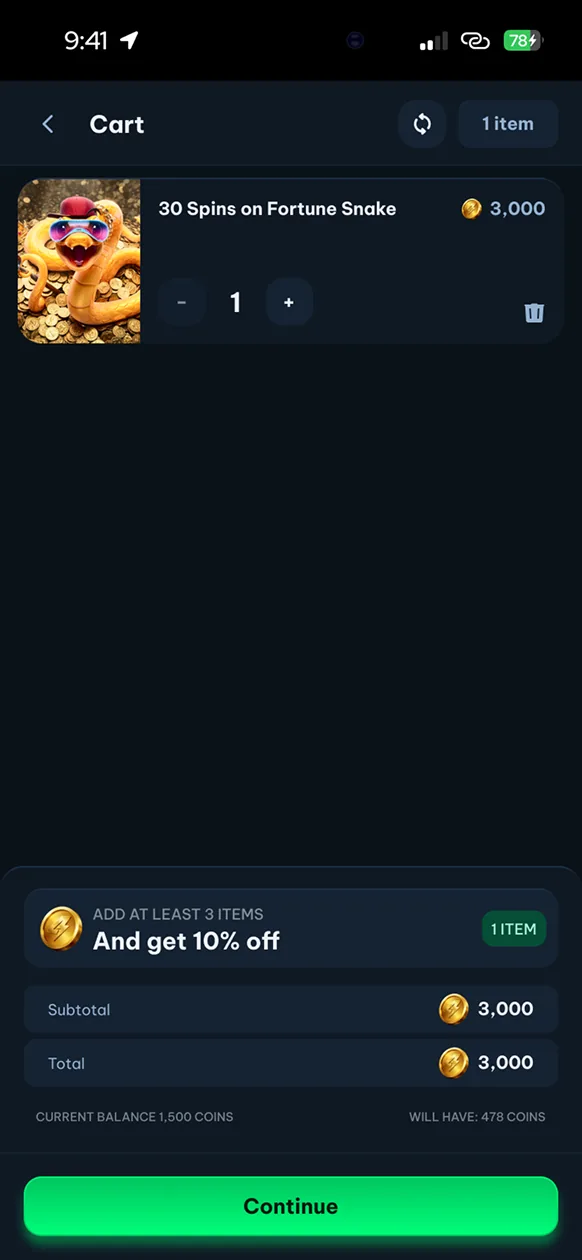
Cart 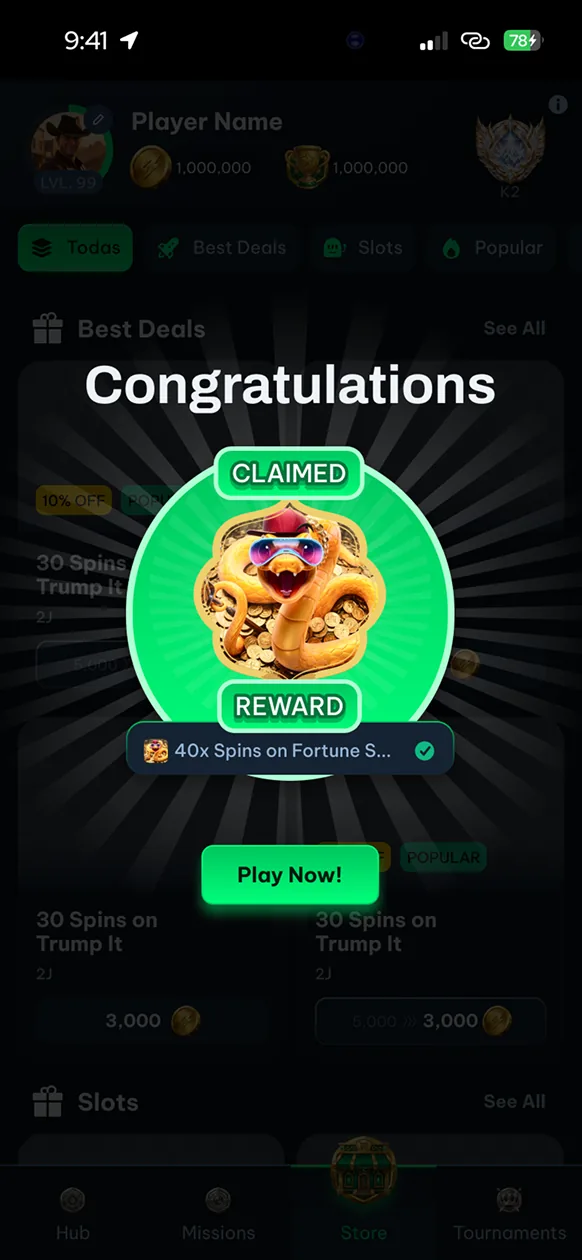
Purchase confirmed
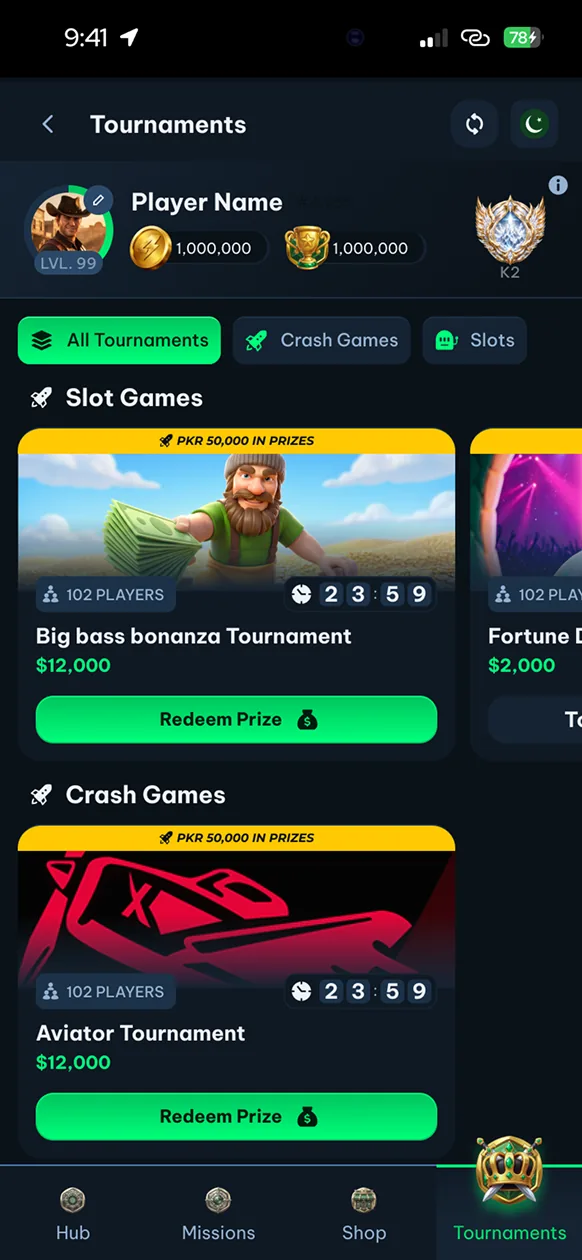
Tournaments
Tournament list and, in the detail, leaderboard, eligible games and rules, with the prize pinned to the top.
Tournament 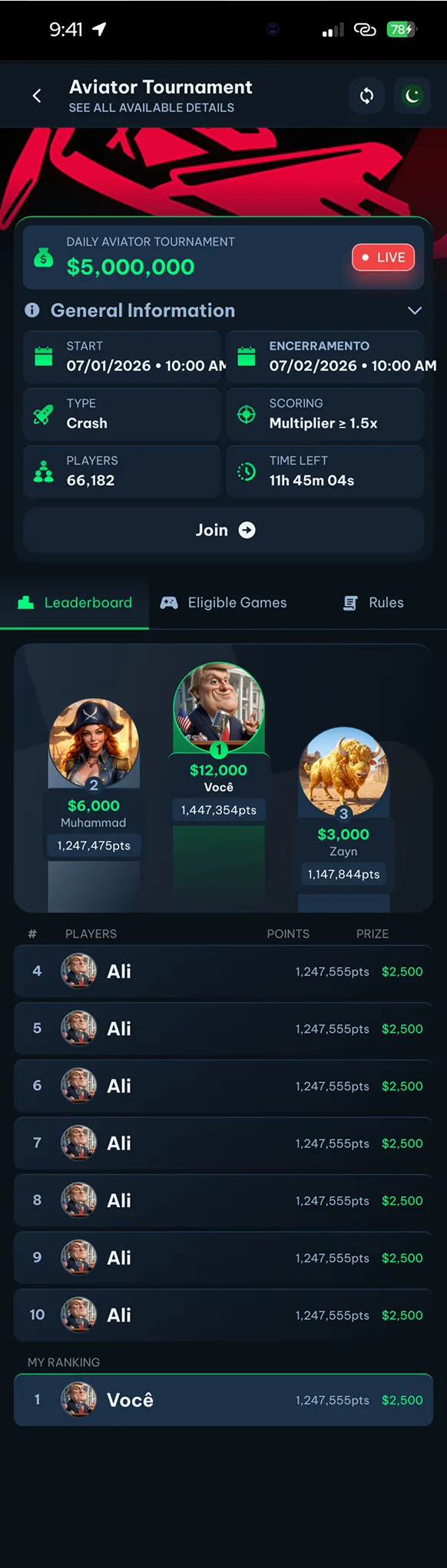
Leaderboard 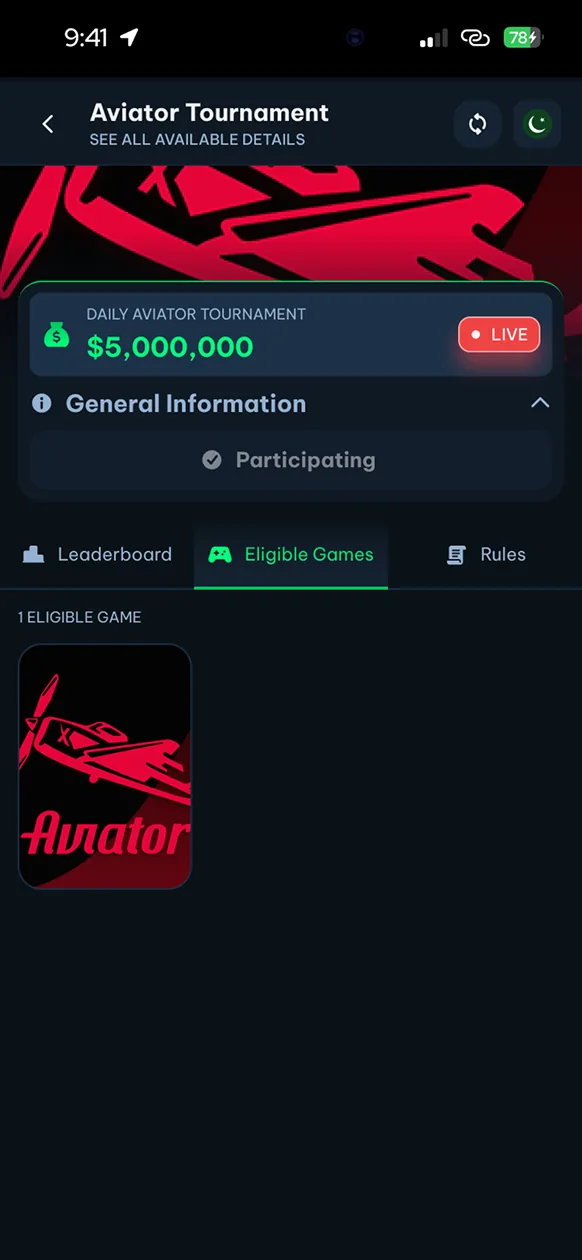
Eligible games 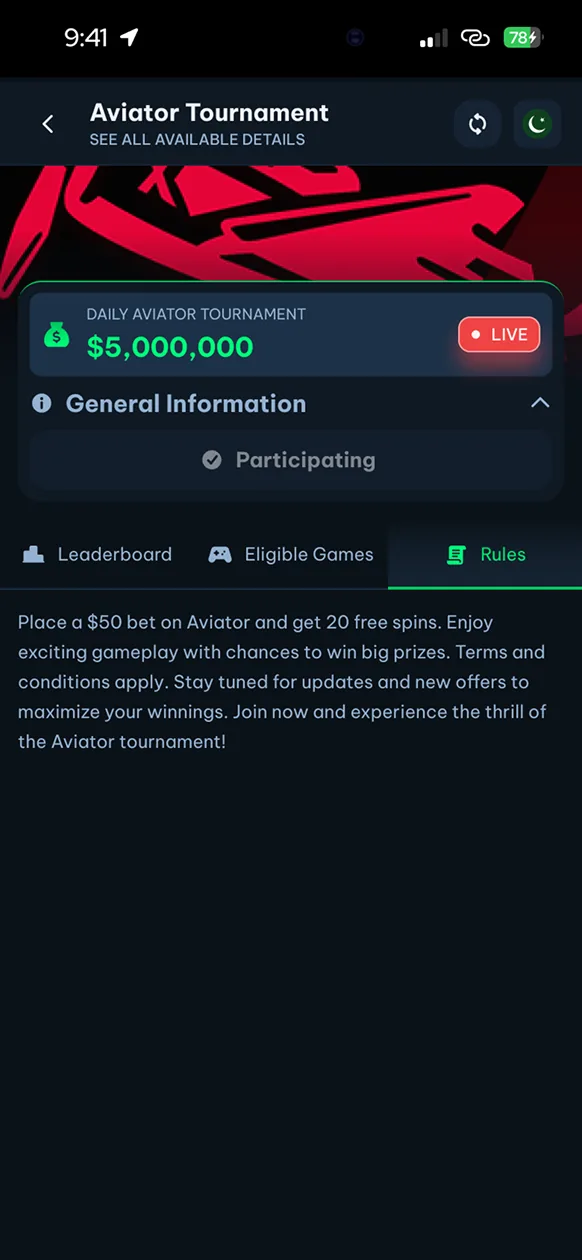
Rules
Profile
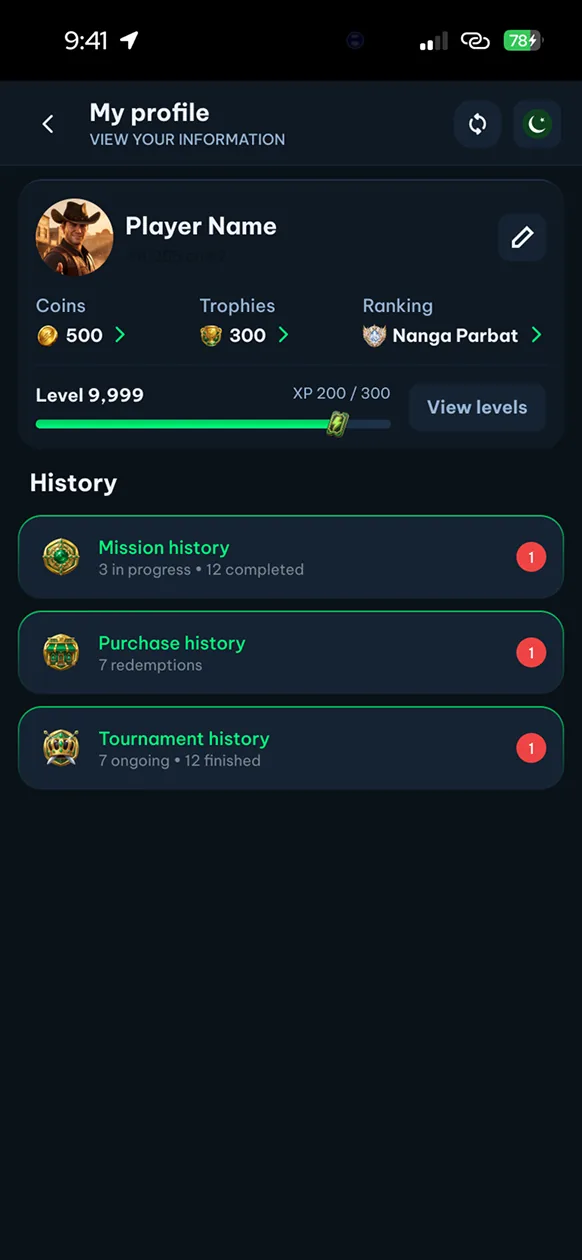
Ranking, level and a history of missions, purchases and tournaments.
Profile 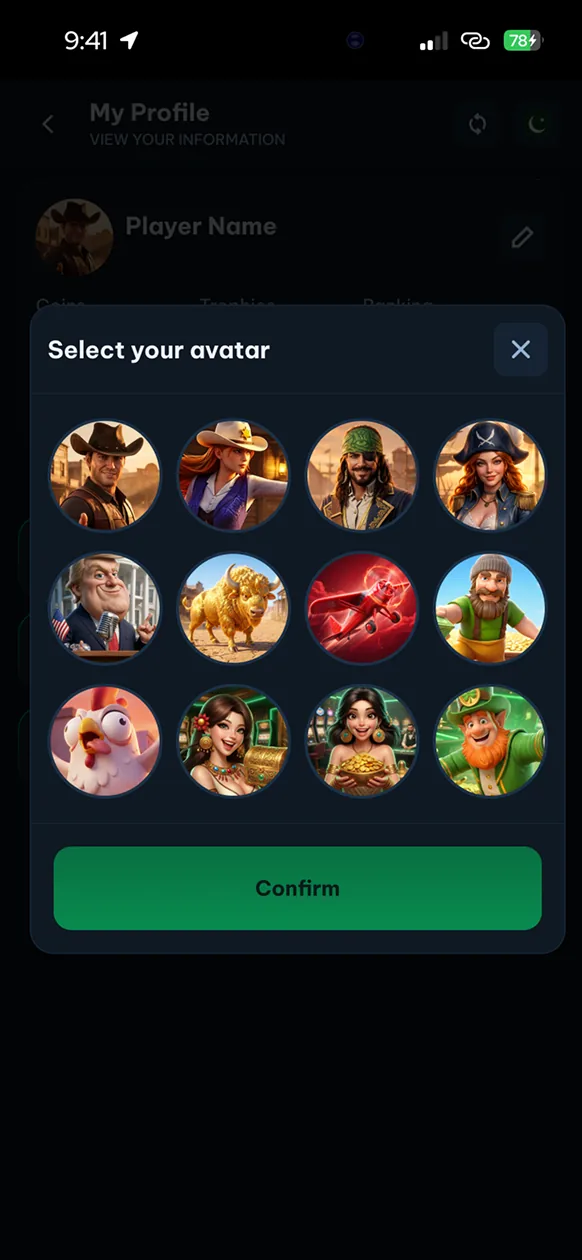
Avatar selection
Challenge
In an online casino, players tend to log in, play and leave. Play4tune needed a reason for them to come back that didn’t rely on deposit bonuses alone.
The design challenge was to bring missions, tournaments, a rewards store and the player profile into a single system, without scattering five new mechanics across the casino interface and without asking players to learn complicated rules to take part.
Solution
I led the design of the whole system, from flows to final screens, together with Product and Engineering and on top of the multi-tenant Design System.
A HUB at the center of the loop
I brought the modules together in a HUB. From there, players reach missions, tournaments, store and profile in one tap and see their coin balance at the top, without hunting for each mechanic across the platform.
Coins as the common thread
I made coins connect the modules: missions and tournaments pay out coins, the store turns them into spins on favorite slots, and the profile closes the cycle with ranking, level and history.
Buying without losing context
In the store, I also put the cart in a widget with a notification, so players can keep browsing the catalog before checking out.
Tournaments that are easy to follow
I separated the tournament list from each tournament’s detail. In the detail, I organized leaderboard, eligible games and rules into three tabs and kept the total prize pinned to the top of all of them.
Result
The system went into production at Play4tune with all five modules connected by the HUB. Because I used the same tokens and components as the multi-tenant Design System, the new screens followed the platform’s standard instead of creating a parallel interface.
The numbers below describe the project’s scope, not business results.
- modules connected by the HUB
- 5
- mobile screens
- 15
- currency for the whole loop
- 1
- tabs in every tournament
- 3